
Disclosure: This post contains affiliate links. If you use these links to buy something we may earn a commission. As an Amazon Associate I earn from qualifying purchases.
What is fondue?
Chances are, you’ve heard of fondue before. Most people immediately think of cheese or chocolate fondue; and although fondue has strong Swiss and French origins, the term fondue may refer to any type of meal where a group of people sit around a communal pot and dip food in some kind of sauce, oil or broth. This includes cheese, of course; but, it could be dipping marshmallows into chocolate or even Chinese-style hot pot (Japanese shabu-shabu) where you dip meat and vegetables into a broth.
For our purposes, let’s stick to cheese fondue; where did it come from? I read one description that claimed that, because of the seasonality and availability of bread and cheese, winter months meant stale bread being brought back to life in a hot cheesy bath; but, let’s get real — that’s a bit hard to swallow. It’s more likely that they ate more bread and cheese during winter months because they (hard cheeses and flour) both preserve really well, for long periods of time. Wine, pickles… they’re all winter foods… and you’ll find them in fondue recipes.
Traditional cheese fondue
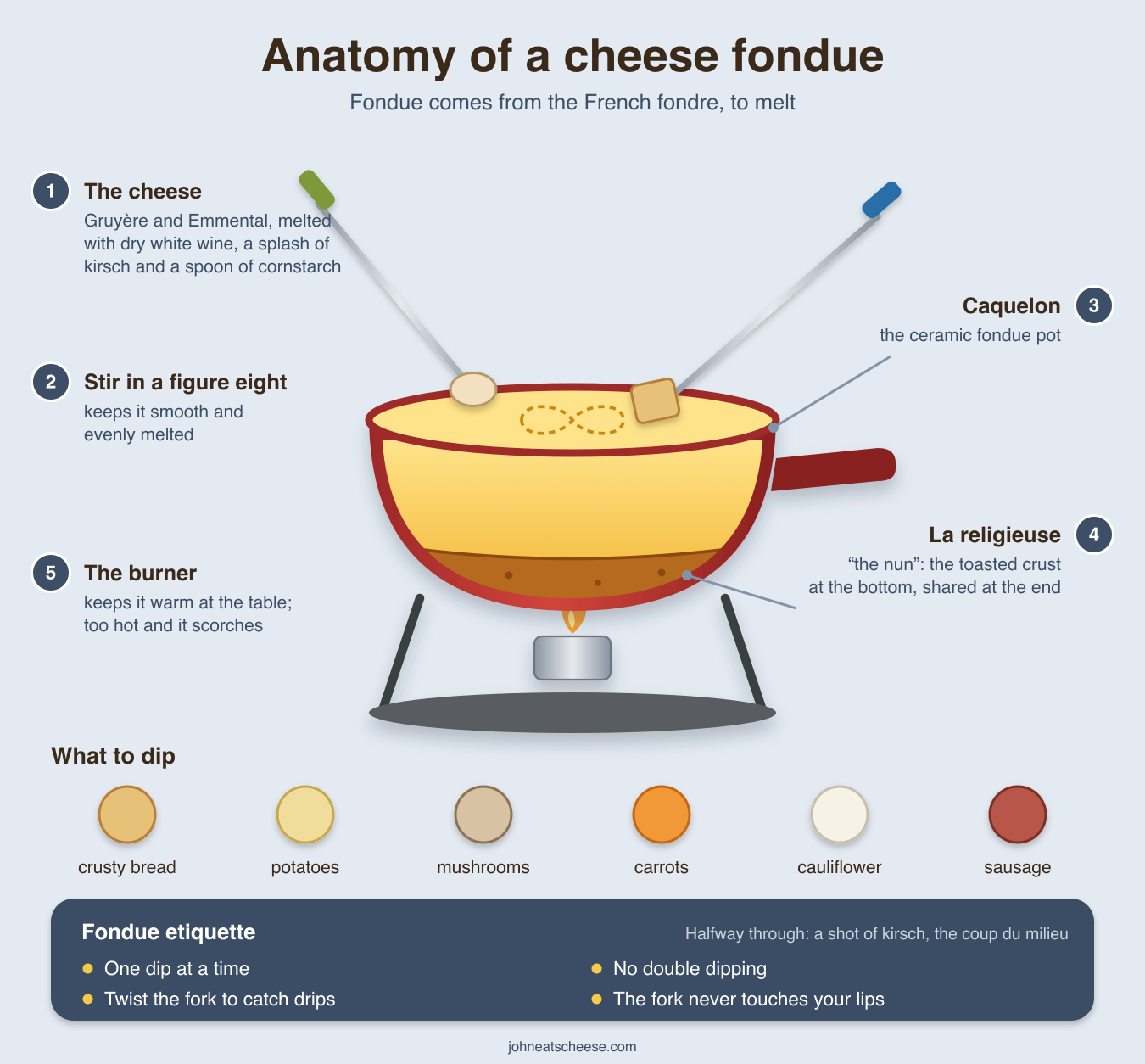
For a classic cheese fondue, melt down some Emmental and Gruyère cheeses with dry white wine and Kirsch, which is a brandy made from cherries. If you can't find Kirsch, you can use another kind — your favorite brandy. Lastly, a tablespoon of cornstarch thickens everything up.

What to dip in fondue?

There are a ton of foods that go great with fondue, but you should have a pretty solid experience if you dip boiled or roasted potatoes, mushrooms, diced carrots, crusty French bread, cauliflower and sausages.
French lesson
Man, this is going to sound pretentious and meaningless; but bear with me. Fondue has Swiss/French origins, so there are some terms that originate from French that have a significance — most importantly, the word fondue, itself. Fondue comes from the French word fondre, which means to melt. Some other fun words:
- coup du milieu (the shot in the middle) - it’s a Swiss tradition to take a shot of kirsch partway through the meal, when your stomach is starting to feel full. Supposedly the shot rejuvenates your stomach and makes more room.
- la religieuse (the nun) - this is the toasted crust of cheese left at the bottom of the pot, which gets shared out at the end. Where the name comes from is a mystery.

Cheese fondue etiquette
For whatever reason many French foods have strict etiquette. Naturally, when you are eating in a group, from the same bowl you’ll need some direction. The following are some ground rules for you to follow to ensure you don’t offend anyone.
- Feel free to scrape the cheese off the bottom or sides of the pot.
- Stir clockwise or in a figure-eight pattern to keep the cheese evenly melted.
- Drink white wine, kirsch or herbal tea with it. Tradition says that keeps a stomach ache away.
- Don’t follow cheese fondue with chocolate fondue for dessert; have some acidic fruit instead.
- Let the cheese drip back into the pot, not onto the table: give your fork a twist.
- Don’t blow on hot cheese. It can spatter the table or someone else, so let it cool on your plate.
- Don’t dip at the same time as someone else. Take turns so everyone gets a chance.
- Don’t double dip.
- If you’re sick, sit this one out.
- Don’t put the dipping fork to your lips. Use disposable forks, or slide the food onto your plate and eat it with a separate fork, and don’t let the two forks touch.
Wrapping up
While most people have experienced fondue in over-done sappy romantic portrayals, fondue is for everyone. In our busy lives, we all need some time to sit with our friends and family and bond over a communal cheese pot. If you don't have one, you can find some inexpensive fondue pots here (Amazon).
What's your favorite food to dip? Let me know in the comments.
Thumbnail photo: Cheese fondue with german Bündnerfleisch and a cornichon on top by Paul Joseph
Ham cubes!