
Disclosure: This post contains affiliate links. If you use these links to buy something we may earn a commission. As an Amazon Associate I earn from qualifying purchases.
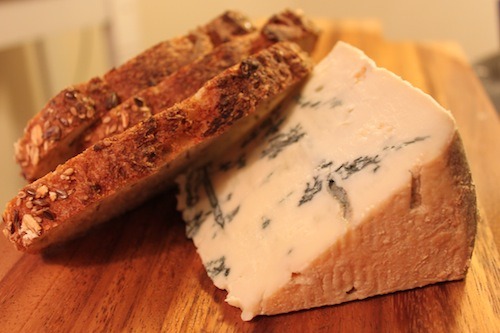
Gorgonzola is an Italian cow’s milk blue cheese from Piedmont and Lombardy, sold in two main styles: mild, creamy Dolce and aged, spicy Piccante.
- Milk: cow’s (pasteurized or raw)
- Made in: Piedmont and Lombardy, Italy (Gorgonzola DOP)
- Style: blue cheese with a natural rind (grey to pinkish, not meant to be eaten)
- Dolce: aged at least 50 days, mild and creamy
- Piccante (also called naturale, stagionato or “mountain” Gorgonzola): aged at least 80 days under the DOP rules for the medium wheel, and often longer
Gorgonzola takes its name from the town of Gorgonzola, near Milan, but the protected cheese is made across a wider area of Piedmont and Lombardy. There are two main styles, Dolce and Piccante, and the difference is mostly about age.
Dolce vs. Piccante
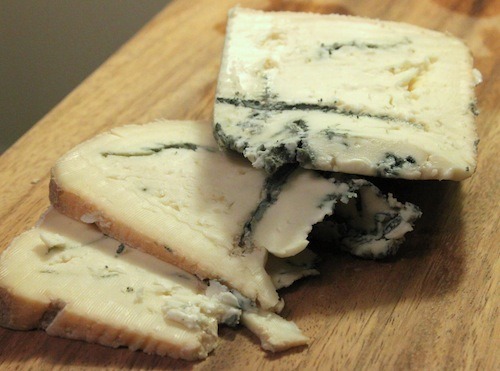
Gorgonzola Dolce is the younger, milder one (aged at least 50 days). It’s sweet, creamier and more buttery, with a lot of moisture, so it’s spreadable and great in a salad dressing.
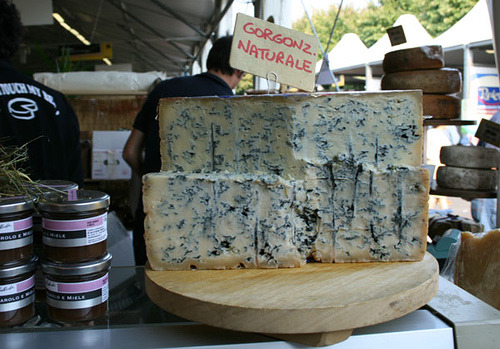
Gorgonzola Piccante is aged longer (at least 80 days), so it’s firmer, with a thicker, drier rind and a spicy, pungent flavor. It’s sometimes called naturale or stagionato.
History of Gorgonzola
There are many stories about where the name comes from. The one from Cowgirl Creamery seems the most reasonable:
What we in this country know simply as “Gorgonzola” is more formally called “Stracchino di Gorgonzola” in Italy. “Stracchio,” which comes from the Italian word for tired (stracca), illustrates the process of the “tired” cows being milked in the course of their long autumn and spring walks to and from seasonal pastures. The herds would stop for a rest in the Lombardy town of Gorgonzola, resulting in Gorgonzola being flush with milk twice a year, the excess was used to make cheese.
Cowgirl Creamery
Another story says the cheese was invented by accident. A young cheesemaker, hurrying off to meet his sweetheart, left a vat of curds open overnight, then tried to hide his mistake by adding fresh curds the next day. A few weeks later, the cheese had turned blue, and it was more delicious than before. It’s a legend, of course (a version of it appears in Cheese: A Connoisseur's Guide to the World's Best (Amazon)). These days the blue mold isn’t an accident at all: cheesemakers add Penicillium mold cultures on purpose.
How to eat it
The smell can be a little strong at first, so leave it at room temperature for at least 30 minutes before serving and it will dissipate.
I think most people in the States eat Gorgonzola over salad, but in Italy it’s most often eaten over pasta or risotto, or alongside polenta. And let’s not forget its crucial role as a pizza topping. Blue cheese also loves something sweet, so see What wine or whiskey goes with cheese? for ideas.
Gorgonzola recipes
- Arugula Beet Salad with Candied Pecans & Gorgonzola Cheese by Lauren Kelly
- Gorgonzola Sauce by Ina Garten
Wrapping up
Definitely pick up your own wedge of Gorgonzola and try it out, but keep in mind that Gorgonzola Piccante has a much stronger smell and flavor than Dolce, so use it sparingly in recipes.
Thank you for sharing my salad! Love this post!