
Disclosure: This post contains affiliate links. If you use these links to buy something we may earn a commission. As an Amazon Associate I earn from qualifying purchases.
Gosh, I really wanted to start off with, Ricotta is a fresh Italian cheese, but by most accounts, ricotta is not considered cheese--but rather a cheese byproduct.
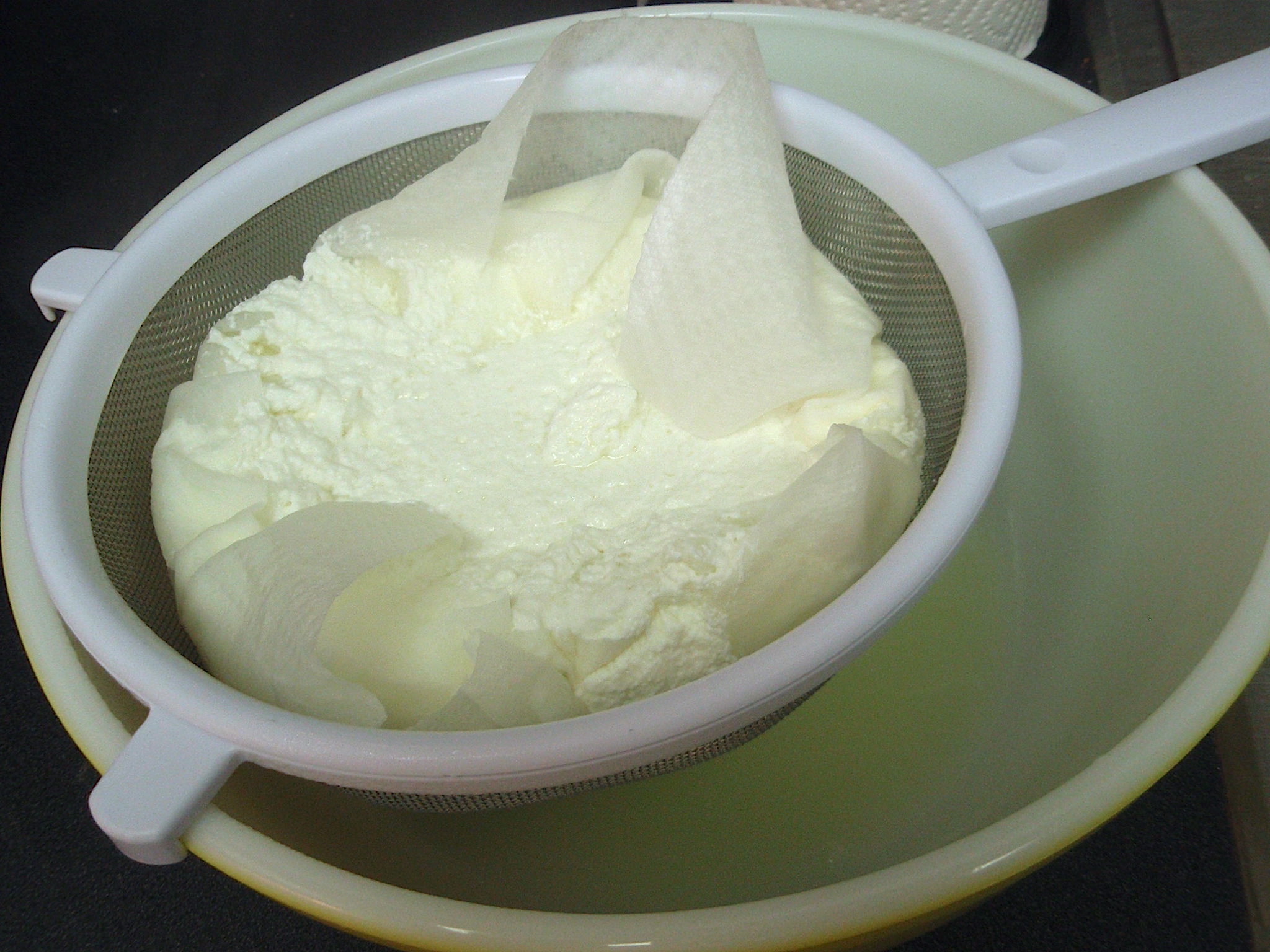
Remember, when you make cheese, you're separating curds from the whey. The curds are the milk solids (proteins) which ultimately are pressed, aged, etc. and become the cheeses you love, e.g. cheddar, gouda, camembert, etc. Ricotta, on the other hand, is made from the whey that you normally discard, or can reuse in several ways, in the process of making other kinds of cheese.
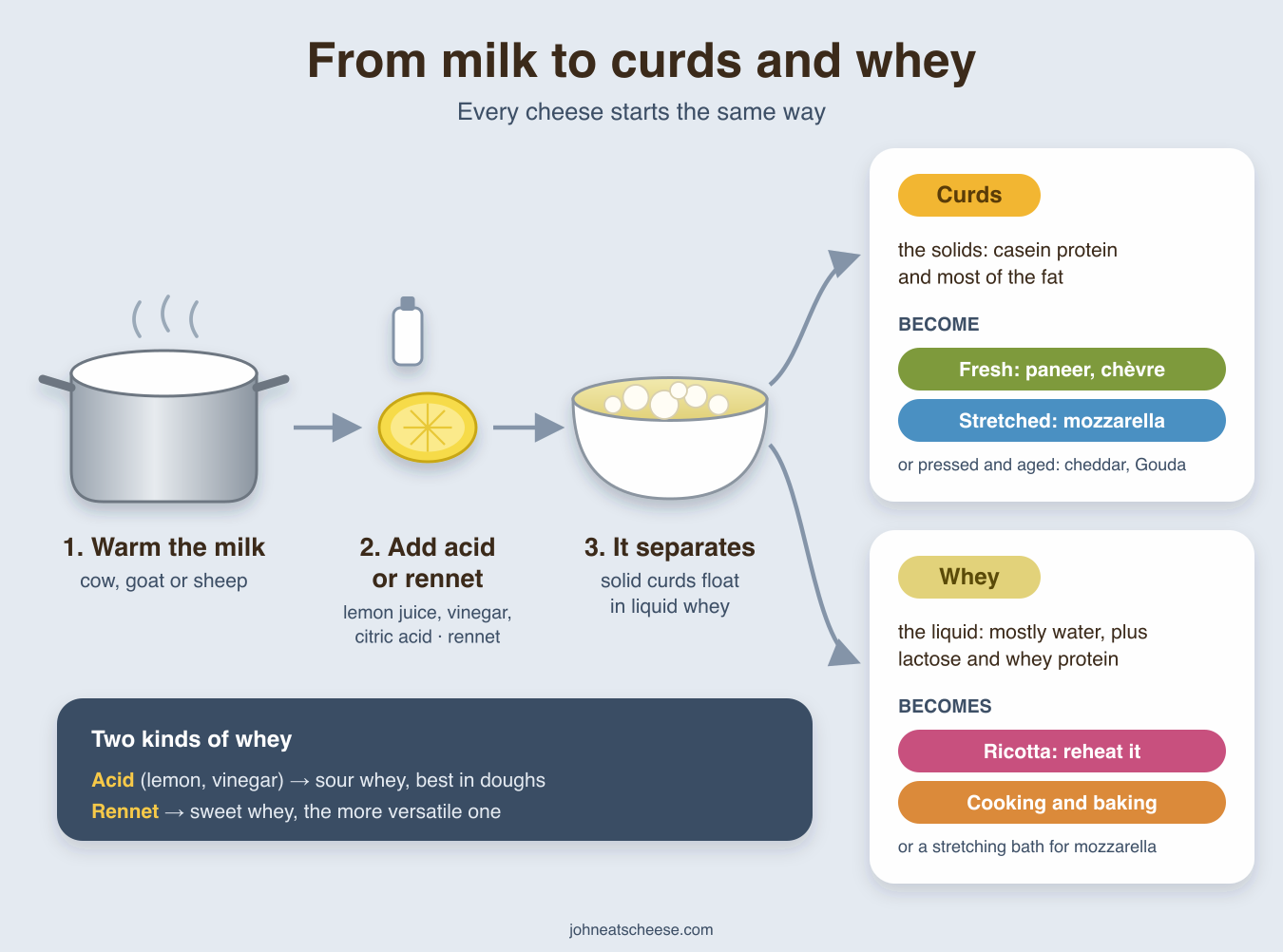
The name ricotta comes from the Italian word meaning recooked. Ricotta, the creamy filling you love in lasagna and ravioli, is made by recooking discarded whey. You might think, if we already separated the curd from the whey, where do the curds in ricotta come from? Good question: even though the typical coagulation process looks like it's removing all the milk proteins, there are trace amounts which coagulate when you heat whey to almost boiling, to form the fluffy ricotta texture.
Make ricotta at home?
It's super easy to make ricotta cheese at home, all you need is some whey, a thermometer and some patience. Once you have your whey collected from your cheese making process, you simply need to heat the whey to 200 degrees Fahrenheit (93° C) and let it cool overnight in sieve lined with either cheese cloth or a coffee filter.

Whey alone makes only a small amount of ricotta, so for a bigger batch, add some whole milk to the whey. (For comparison, a gallon of whole milk makes roughly 1 to 2 pounds of ricotta on its own.) For even better texture add buttermilk or heavy cream, and make sure not to fully boil the whey. Fully boiling the whey will make the texture tough.
This process can be pretty time consuming, and not everyone has whey just hanging around. But if you're interested in making your own ricotta at home, you should get yourself a cheese making kit (Amazon). There isn't a kit to only make ricotta (because it would just be a cheese cloth) but you can try your hand at mozzarella, and then turn the whey into ricotta.