Disclosure: This post contains affiliate links. If you use these links to buy something we may earn a commission. As an Amazon Associate I earn from qualifying purchases.
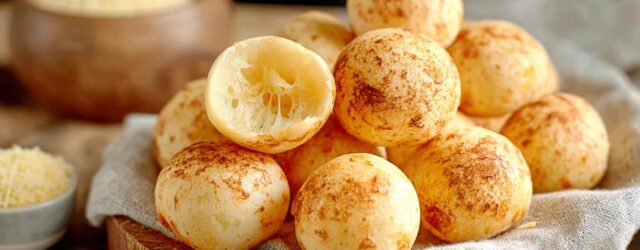
Pão de queijo (say “pow jee KAY-zhoo”) means “cheese bread” in Portuguese. These are small, puffed, chewy rolls with a crisp shell, made from tapioca starch instead of wheat flour. They come from the Brazilian state of Minas Gerais, and you can make a batch in about 40 minutes.
What they are
Pão de queijo is tied to Minas Gerais, a state known for its dairy, and it is eaten all over Brazil. The dough is made with polvilho, a starch from the cassava (manioc) root, so there is no wheat flour and no yeast. The dough is scalded with hot milk and oil, mixed with egg and cheese, and baked until the outside is crisp and the inside is soft and stretchy. Food writers link the bread to Minas’s dairy tradition (National Geographic Brasil, in Portuguese), though the exact story of how it began is told in different ways.
Sour or sweet starch
Brazilian recipes use two kinds of polvilho. Polvilho azedo (sour) is fermented, which makes the rolls lighter and a little tangy. Polvilho doce (sweet) is unfermented and gives a softer, denser roll. Many traditional recipes use sour starch or a mix of the two, as described by TudoGostoso (in Portuguese).
In the US, the starch you can find in most grocery stores is labeled “tapioca starch” or “tapioca flour”, and it is the sweet kind. That works fine. Sour starch is sold in Brazilian and Latin markets and online. Don’t buy farinha de mandioca (manioc flour): it is coarse and won’t give you this dough.
Tapioca starch (sweet)
Anthony's Organic Tapioca Flour Starch, 2.5 lb. The plain tapioca starch most US stores carry, and what the recipe below uses.
Check price on AmazonPolvilho azedo (sour starch)
Yoki Polvilho Azedo, 17.6 oz. The fermented starch many Brazilian recipes use. Try it in place of some or all of the sweet starch.
Check price on AmazonWhich cheese to use
The traditional choice is queijo minas meia cura, a lightly aged Minas cheese that is firm enough to grate. It is hard to find outside Brazil. Many US recipes use grated Parmesan, sometimes with some mozzarella for stretch, and that is what I’d reach for. Use something you can grate finely that has real flavor, because the starch itself tastes of very little. For more on the Brazilian cheeses, see my guide to Brazilian cheese.
Ingredients
Makes about 16 to 20 rolls.
- 2 cups (about 250 g) tapioca starch (sweet), plus a little extra for your hands
- 3/4 cup (180 ml) whole milk
- 1/4 cup (60 ml) neutral oil, such as canola or sunflower
- 1 teaspoon fine salt
- 1 large egg
- 1 1/4 cups (about 115 g) finely grated cheese: Parmesan, or Parmesan and mozzarella
Method
- Heat the oven to 400°F (200°C) and line a baking sheet with parchment.
- Scald the starch. Put the starch in a large bowl. Heat the milk, oil and salt in a small pan until it just comes to a simmer, then pour it over the starch and stir with a wooden spoon until no dry starch is left. The dough will be shaggy and a bit gluey. That is normal.
- Let it cool for 5 to 10 minutes, so the heat doesn’t scramble the egg.
- Add the egg and cheese. Beat in the egg, then the cheese, until you have a soft, sticky dough. Wet or lightly starched hands help.
- Check the dough. It should be soft but hold together when scooped. If it is too loose to shape, chill it for 30 minutes. If it is very stiff, mix in a spoonful of milk. Starch brands absorb differently, so you may need to adjust.
- Shape. Roll the dough into balls about the size of a golf ball and set them an inch apart on the sheet.
- Bake for 20 to 25 minutes, until they are puffed and golden. Smaller balls need less time and bigger ones need more. They will deflate a little as they cool.
Eat them warm.
Notes
- Gluten-free: the ingredients contain no wheat, but check your starch and cheese labels if you need to be strict.
- Sour starch: to try it, swap in half or all of the sweet starch. The dough may need a little more liquid.
- Mini version: bake in a mini muffin tin for neater, smaller rolls.