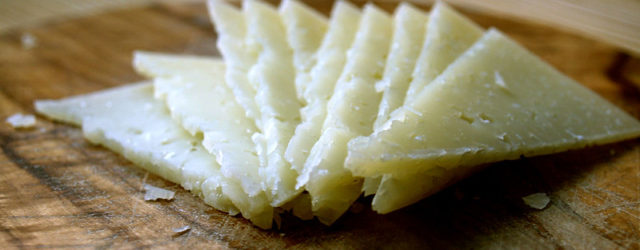
This is very exciting, we are about to go on a tour of Spanish cheeses. I managed to get ahold of some Manchego, Iberico and some Murcia al Vino. Today, I am going to talk about one of Spain’s most popular cheeses, a hard sheep’s milk cheese called Manchego.
Caffe latte, bolle og manchegoBefore we go too much further, let me tell you that Manchego is a Spanish D.O.P. cheese.
What does DOP mean?
Well, it literally means Protected Designation of Origin—or, “Denominación de Origen Protegida,” as the locals would say. This mark ensures that the milk is sourced and the cheese is produced in a certain geographical region, for whatever reason—typically having historical or traditional significance. Going a step further, this mark both attests to the high quality of the product and its being made using traditional production methods.
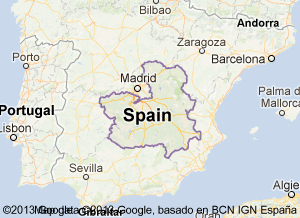
So, Manchego is the most popular, famous, important Spanish cheese, which also made a cameo in the famous Cervantes novel, Don Quixote; it goes without saying that Manchego is a national treasure. And because of its origin, the native esparto grass, and evolution of the practice and its history in La Mancha, it has been declared that only real Manchego may be produced in this region (including Toledo, Ciudad Real, Cuenca and Albacete). This doesn’t mean that you can’t make it elsewhere, it just isn’t considered real Manchego—nor does it have the same type of quality assurance.
What is esparto grass, and why is it significant?
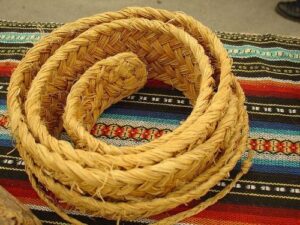
Esparto, also known as Alpha/Alfa, is a type of grass that is found in Northwest Africa and the southern part of the Iberian peninsula. It’s commonly used as a raw material for crafts, paper products, as well as (drum roll) cheese making! The esparto grass is woven into a mat, which is used as mold. Not only does the grass wick moisture from the cheese, but it imprints a zigzag pattern on the sides. Of course, this is how it is done traditionally; in industrial Manchego production they no longer use an esparto grass mold (right).
WikiMedia Commons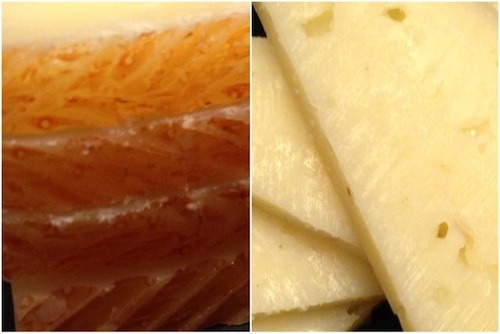
Taste, texture and that’s all folks
First off, because of the ingredients and long aging process I’m going to say right off the bat, that this cheese reminded me a lot of Paski Sir, which is a Croatian aged hard sheep’s milk cheese, as well. The taste of Manchego is very buttery and is also a little spicy; but, it also has that great fatty sheep’s milk taste.
Manchego cheese is aged at least 60 days (30 days for small cheeses up to about 1.5 kg); and, during the aging process, protein salts will actually crystalize. The longer the cheese is aged, the more crystals form, and, the cheese develop eyes and a grainy texture; this is typical.
Manchego is great on a cheese board with crusty bread. You can serve it with olives, sun dried tomatoes, and sopressata for an unforgettable treat.
What do you like to eat with your Manchego? Let me know in the comments below.
Does the grass mold on Manchego mean the cheese has a vegetarian rennet? I am trying to find cheese with vegetarian rennet. Thank you.
The grass mold only gives Manchego it’s textured appearance. Manchego is made with animal rennet, so it is not a vegetarian cheese. I found this discussion on chowhound that you might find useful about vegetarian cheeses. http://chowhound.chow.com/topics/287894