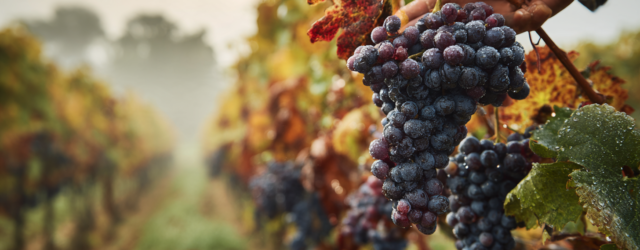
A vintage is simply the year the grapes were harvested, not the year the wine was bottled or released. It is the big number on the label, and it is easy to assume that a higher or older year means better. It is a little more complicated than that.
What the year on the label means
Most wines you will buy are vintage-dated, meaning the grapes came from a single harvest. The rules differ by country. In the US, a wine labeled with an AVA (a recognized growing area) must have at least 95 percent of its grapes from the stated year, and a wine with only a state or county appellation needs at least 85 percent (27 CFR 4.27). In the EU the figure is 85 percent (Regulation 2019/33), and Australia and New Zealand also use 85 percent. So a vintage wine can legally include a small share of other years.
What “non-vintage” means
Sparkling wines like Champagne, and fortified wines like Port and Sherry, are often non-vintage (NV). The producer blends wine from several years to keep a consistent house style. When a Champagne house does print a year on the bottle, it is generally because it judged that harvest to be exceptional.
Why the weather matters
A warm, dry growing season usually gives ripe, balanced grapes. Heavy rain near harvest can dilute flavor and invite rot, and frost can wipe out part of a crop. The weeks just before and during harvest are the riskiest, because a storm or heat wave can undo a year of work.
The same weather is not good or bad for every grape. Shiraz likes warm, sunny conditions that ripen its sugars fully, while Sauvignon Blanc usually does better in cooler climates, such as New Zealand’s Marlborough region, where it ripens slowly and keeps its acidity.
Does the vintage still matter?
It matters most in regions where the weather is changeable, and less where it is reliably warm and sunny. Modern farming and better winemaking have also narrowed the gap between good and poor years, so an average year can still produce a good bottle from a skilled producer. Vintage charts are a rough guide, not a rule, and a great producer in an average year often beats an average producer in a great one.
Wrapping up
For everyday drinking, look for a recent vintage on whites and rosés and don’t stress about the rest. For wines you plan to age, check a vintage chart or ask your wine seller. And for what to pour with cheese, see What wine or whiskey goes with cheese? or What are tannins in wine?